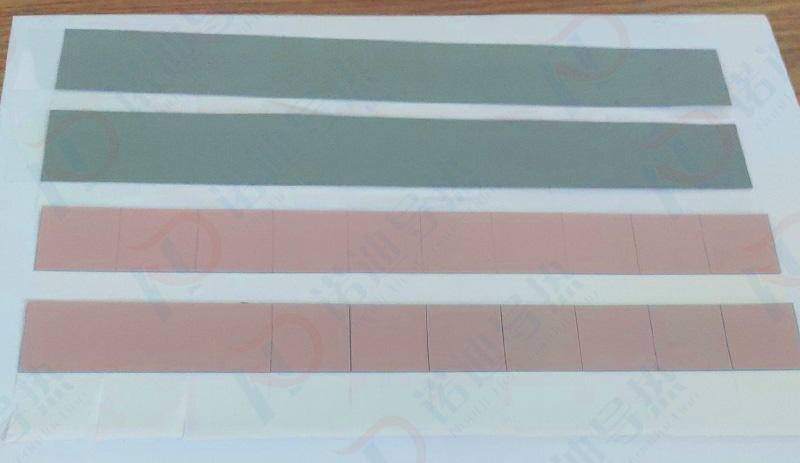
In the surging tide of deep integration between digital technology and the industrial revolution, the performance of electronic devices has seen exponential leaps, while industrial machinery is accelerating its iteration toward precision and high efficiency. However, the heat dissipation dilemma accompanying the increase in computing power and the surge in power density has become a "neck-breaking" challenge hindering the advancement of technology. From smartphones with nanoscale chip stacking to super data centers carrying global data flows, from power battery systems driving new energy vehicles to aerospace instruments exploring deep space, heat dissipation efficiency not only determines the full-life-cycle stability of equipment but also becomes a core factor concerning system safety and the breakthrough of performance limits. Thermal conductive phase change materials are quietly reshaping the underlying logic of heat dissipation technology with their subversive thermal management mechanisms.
The core breakthrough of thermal conductive phase change materials stems from their creative application of the laws of material phase change. These materials can achieve dynamic transitions between solid-liquid, liquid-gas and other phases within a preset phase change temperature range. When heat generated by equipment operation raises the ambient temperature to the melting point of the phase change material, the molecular chains of the material begin to deconstruct and reorganize, transforming from a crystalline structure to a disordered liquid state. During this process, the material can absorb 5-14 times more energy in the form of latent heat than conventional sensible heat absorption, acting like a quantum-level "heat buffer zone" that efficiently converts the instantaneous heat peaks generated by equipment into molecular potential energy for storage. When the system temperature drops, the material undergoes a reverse crystallization process, releasing stored heat at a controlled rate to achieve dynamic balance regulation of thermal energy. This heat buffering mechanism based on phase change enthalpy makes thermal conductive phase change materials intelligent thermal management media with both energy storage and heat dissipation functions.
Compared with traditional passive heat dissipation solutions such as metal heat sinks and air-cooling systems, thermal conductive phase change materials exhibit revolutionary performance advantages. Their ultra-high phase change latent heat (up to 300-500kJ/kg) and interface thermal resistance as low as 0.1-0.3W/(m·K) enable them to absorb sudden heat flows from equipment within milliseconds and control temperature fluctuations within ±2℃. Taking the measured data of a certain super-large data center as an example, when using a traditional air-cooling scheme, the core temperature of the server CPU could reach 85℃ after 3 hours of full-load operation; after introducing a phase change material composite heat dissipation module, the temperature peak was suppressed to 68℃, the system PUE (Power Usage Effectiveness) was reduced by 12%, and annual power savings exceeded ten million kilowatt-hours.
In terms of application adaptability, thermal conductive phase change materials demonstrate excellent engineering flexibility. By adjusting the ratio of polymer polymers to inorganic fillers, special materials suitable for extreme cold environments of -50℃ to high-temperature working conditions of 300℃ can be customized. In the new energy vehicle field, phase change material heat dissipation pads applied to battery modules can control the temperature difference of the battery pack within 5℃, increasing the driving range by 8-12% and extending the battery cycle life by 20%. In electromagnetic-sensitive environments such as 5G base stations and aerospace instruments, thermal management and signal integrity protection can be achieved simultaneously by doping electromagnetic shielding fillers.
Driven by the "dual carbon" strategy, the green attributes of thermal conductive phase change materials are even more valuable. Their main components mostly use bio-based polymers or environmentally friendly paraffins, and the production process complies with RoHS environmental standards. In industrial scenarios, replacing traditional liquid cooling systems can reduce the risk of coolant leakage; in the consumer electronics field, reducing equipment temperature rise can shorten processor frequency reduction time by 60%, indirectly optimizing energy consumption. Data from an industrial automation production line shows that after adopting a phase change heat dissipation scheme, annual equipment power consumption was reduced by 18%, and operation and maintenance costs were reduced by 35%.
Standing at the forefront of the Fourth Industrial Revolution, thermal conductive phase change materials are moving from the laboratory to the deep water of industrial application. With the breakthrough of micro-nano packaging technology and 3D printing processes, it may be possible in the future to achieve integrated integration of nanoscale phase change units and chips, providing thermal management solutions for the continuation of Moore's Law. This innovative material, which combines technical subversion and environmental friendliness, is bound to become the key to unlocking the performance ceiling of next-generation intelligent devices and promote the accelerated advancement of human society toward an efficient and low-carbon smart era.

QQ客服1
QQ客服2
13713346890
dg_jnkj@163.com