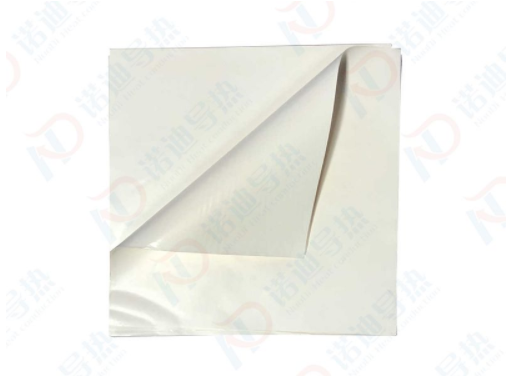
During the operation of electronic devices, heat generation has always been a critical factor affecting their performance and service life. As electronic devices evolve toward miniaturization and high-performance capabilities, the requirements for heat dissipation materials have become increasingly stringent. Ultra-high thermal conductivity silicone film, as an exceptional heat dissipation material, has emerged to provide an efficient solution to the heat dissipation challenges of electronic devices.

I. Analysis of Excellent Performance
Ultra-high Thermal Conductivity:
This is the core advantage of ultra-high thermal conductivity silicone film. Its thermal conductivity far exceeds that of ordinary heat dissipation materials, reaching 10W/mK or even higher. Take a well-known brand's ultra-high thermal conductivity silicone film as an example, its thermal conductivity is as high as 15W/mK, which increases the heat transfer efficiency by several times compared with ordinary silicone sheets. Such high thermal conductivity can conduct a large amount of heat in a short time, significantly reducing the temperature of electronic components and ensuring the device operates stably in high-temperature environments.
Good Insulation Performance:
Electrical insulation is crucial in electronic devices. Ultra-high thermal conductivity silicone film has excellent insulation performance, which can effectively isolate components with different potentials and prevent problems such as current leakage and short circuits. Its insulation resistance can be as high as over 10^14Ω・cm, and the voltage resistance can reach thousands of volts, providing a reliable guarantee for the safe operation of electronic devices.
Excellent Compression Performance:
The contact surfaces between electronic components and radiators are often uneven. The good compression performance of ultra-high thermal conductivity silicone film allows it to adapt to such unevenness. When subjected to a certain pressure, the silicone film can be compressed and deformed to closely fill gaps, expel air, and reduce thermal resistance. Its compression rate can reach 30%-50%, and it can achieve good heat transfer effects even under low pressure.
Stable Chemical Properties:
Ultra-high thermal conductivity silicone film has a high degree of chemical stability and can maintain stable performance in various complex environments. It can withstand the erosion of chemical substances such as strong acids, strong alkalis, oils, and saltwater, and will not be damaged by chemical corrosion. Whether in a humid environment or an industrial environment with corrosive gases, it can reliably perform heat dissipation, greatly improving the reliability and service life of electronic devices.
Wide Operating Temperature Range:
Electronic devices may face various usage environments from low to high temperatures. Ultra-high thermal conductivity silicone film can adapt to a wide temperature range, generally working normally in environments from -50°C to +200°C. In extreme low temperatures, it does not become brittle or hard and still maintains good flexibility; in high-temperature environments, it does not experience performance degradation, melting, or deformation, always maintaining stable heat dissipation effects.
Certain Shock Absorption and Buffering Effects:
In addition to heat dissipation, ultra-high thermal conductivity silicone film can also play a certain shock absorption and buffering role. When electronic devices are subjected to vibration or impact, the elasticity of the silicone film can absorb part of the energy, reducing the impact of vibration on electronic components, thereby reducing the risk of component damage due to vibration and prolonging the service life of the device.
II. Diverse Application Scenarios
Consumer Electronics:
In devices such as smartphones, tablets, and laptops, critical components like processors and graphics cards generate significant heat during operation. Ultra-high thermal conductivity silicone film can rapidly transfer this heat to the cooling module, preventing performance degradation and lag caused by overheating. For example, after a certain brand of laptop adopted this silicone film, the CPU temperature dropped by approximately 10°C during high-load gaming, effectively improving gaming smoothness and device stability.
Automotive Electronics:
The engine compartment of vehicles operates at high temperatures and contains numerous electronic devices, imposing extremely strict requirements on heat dissipation. Ultra-high thermal conductivity silicone film can be used for heat dissipation in components such as automotive engine control units (ECUs), power modules, and LED headlights. It not only ensures the stable operation of automotive electronics in high-temperature environments but also enhances their reliability and guarantees driving safety. For instance, using this silicone film in LED headlights can effectively reduce the temperature of lamp beads, extend the headlight service life, and improve lighting performance.
Industrial Electronic Equipment:
Devices such as frequency converters, servo drives, and power modules in industrial production often require long-term continuous operation, making heat dissipation directly critical to production stability and efficiency. Relying on its excellent performance, ultra-high thermal conductivity silicone film can meet the stringent heat dissipation needs of these industrial devices. In harsh industrial environments such as high-temperature, high-humidity, and dusty workshops, its advantages in chemical stability and insulation performance become more prominent, ensuring reliable equipment operation and reducing failure rates.
Communication Base Station Equipment:
With the popularization of 5G communication technology, the power of communication base station equipment continues to increase, making heat dissipation an urgent issue to address. Ultra-high thermal conductivity silicone film can be used for heat dissipation in heat-generating components of base stations, such as radio frequency modules and power modules. It can effectively reduce equipment temperature, improve the stability and reliability of signal transmission, and ensure the smooth operation of communication networks.
Conclusion
Ultra-high thermal conductivity silicone film demonstrates powerful heat dissipation advantages in numerous fields such as consumer electronics, automotive electronics, industrial electronics, and communication base stations, thanks to its ultra-high thermal conductivity, good insulation, excellent compressibility, stable chemical properties, wide operating temperature range, and certain shock absorption and buffering capabilities. It provides a reliable and efficient solution to the heat dissipation challenges of electronic devices, strongly promoting the development of electronic devices toward high performance and miniaturization. In the future, with the continuous advancement of electronic technology, ultra-high thermal conductivity silicone film is expected to be applied in more fields and continue to optimize and upgrade, safeguarding the stable operation of electronic devices.

QQ客服1
QQ客服2
13713346890
dg_jnkj@163.com