The Role and Importance of Thermal Grease
Thermal grease (Thermal Grease) is a high-efficiency thermal interface material (TIM) used to fill the microscopic gaps between chips (such as CPUs, GPUs, IGBTs, etc.) and heat sinks, reducing thermal resistance and enhancing heat dissipation efficiency. In fields such as consumer electronics, servers, automotive electronics, 5G base stations, and power modules, the correct application of thermal grease is crucial. Especially in mass production, efficient and precise coating methods can improve product consistency and optimize heat dissipation performance.
Application Methods of Thermal Grease
1. Dot Method
Suitable scenarios: small-sized chips (such as laptop CPUs, mobile phone SoCs) or for beginners.
Operation steps:
Use the pointed nozzle of the thermal grease tube or a toothpick to take a small drop of thermal grease (approximately 1-2 mm in diameter, the size of a soybean) and place it in the center of the chip.
Gently align and attach the heat sink, then press slowly and rotate slightly to allow the thermal grease to spread evenly under the pressure of the heat sink.
Notes:
The amount of thermal grease must be strictly controlled, as excess grease may overflow and contaminate the circuit board.
Suitable for scenarios where the heat sink and chip have close and uniform contact (such as the integrated heat dissipation design of laptops).
2. Line Method
Suitable scenarios: rectangular chips (such as desktop CPUs) or scenarios requiring alignment with the heat sink's airflow direction.
Operation steps:
Extrude a thin, elongated line of thermal grease along the long edge of the chip surface (slightly shorter than the chip's side length, approximately 1-2 mm wide).
Align the heat sink and press down vertically. The thermal grease will spread laterally under pressure to form a uniform thin layer.
Advantages:
The spreading direction of the thermal grease aligns with the fin direction of the heat sink, reducing thermal resistance and enhancing heat dissipation efficiency.
Suitable for manual heat sink installation requiring quick operation (such as DIY computer assembly).
3. Cross Method
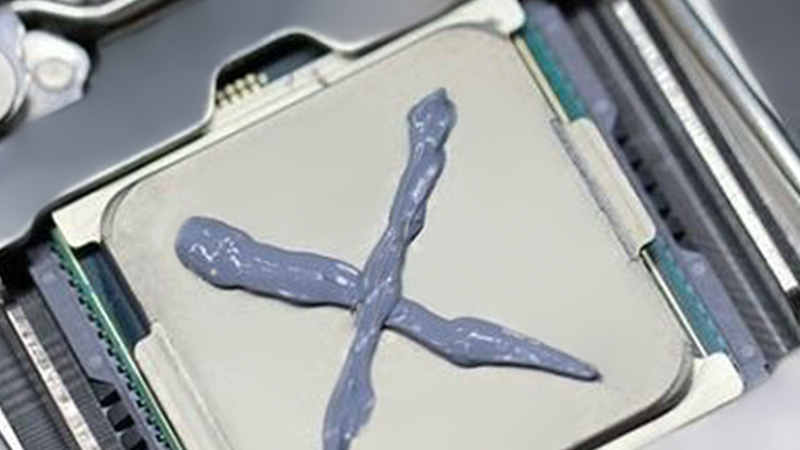
Suitable scenarios: large-sized chips or situations with a large heat sink contact area (such as high-performance GPUs).
Operation steps:
Extrude four lines of thermal grease in a "cross" pattern on the chip surface (covering the center and four corners of the chip).
When installing the heat sink, gently press the central area first, then apply uniform pressure outward to allow the thermal grease to spread radially.
Notes:
Avoid over-applying at the edges to prevent the thermal grease from squeezing onto components such as capacitors around the chip.
Suitable for scenarios requiring balanced heat dissipation between the center and edges (such as GPUs with dispersed chip cores).
4. Spatula Method
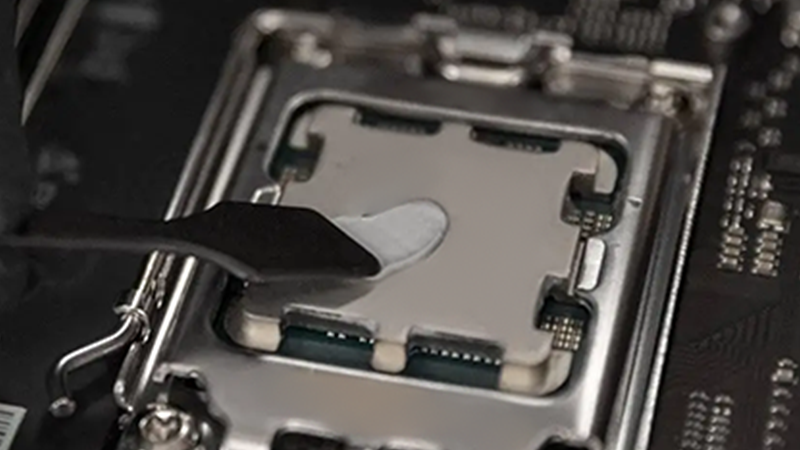
Suitable scenarios: Professional scenarios requiring extreme uniformity (e.g., overclocking enthusiasts, industrial heat dissipation modules).
Operation steps:
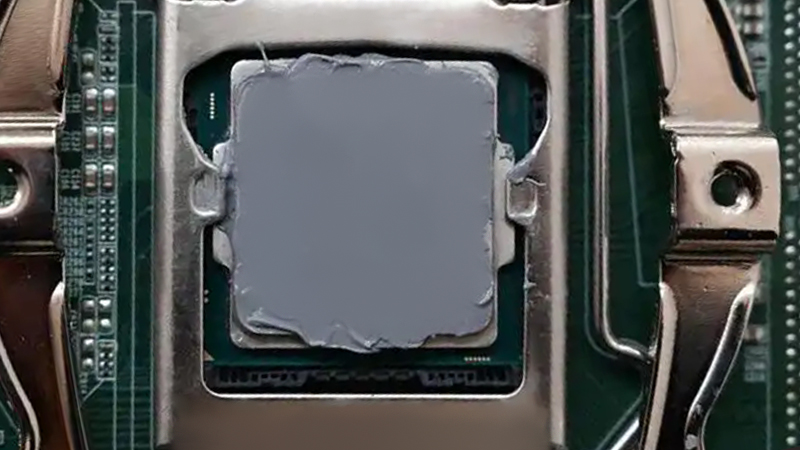
Use a specialized spatula (or a credit card, hard plastic sheet) to take a small amount of thermal grease and spread it evenly on the chip surface.
Tilt the spatula at a 45° angle and slide it slowly to ensure uniform thickness (ideal thickness: ~0.05–0.1mm).
Advantages:
Enables precise control of thermal grease thickness, avoiding air bubbles and unevenness for maximum thermal conductivity.
Requires alcohol and lint-free cloth to clean overflowing grease from edges.
5. Grid Method
Suitable scenarios: Multi-core chips (such as server CPUs) or scenarios with uneven pressure from the heatsink.
Operation steps:
Extrude multiple small dots of thermal grease in a grid pattern (e.g., 3x3 matrix) on the chip surface, with each dot approximately 1mm in diameter.
When installing the heatsink, apply pressure evenly across multiple points to ensure the thermal grease spreads and merges uniformly over the core areas.
Principle:
Addresses the layout of multiple cores (dies) within the chip by ensuring consistent thermal grease thickness above each core, preventing localized hotspots.
General Precautions:
Cleaning Preparation: Wipe the chip and heatsink surfaces with anhydrous alcohol (≥95% purity) and lint-free cloth to remove old thermal grease, dust, and oils.
Dosage Control: More grease does not improve performance; excess can increase thermal resistance. The ideal amount should cover the chip surface without piling up.
Avoid Contact with Electronic Components: Keep hands steady to prevent grease from contaminating nearby capacitors, resistors, or other components. Clean immediately with alcohol-dipped cotton swabs if contamination occurs.
Replacement Cycle: Thermal grease ages and dries over time. Reapply every 1-2 years or when the device exhibits noticeable overheating.
Common Mistakes and Consequences:
Applying Too Thick: Creates a "grease layer" instead of a thin film, significantly increasing thermal resistance and reducing cooling efficiency.
Trapping Air Bubbles: Air gaps act as thermal insulators, causing localized temperature spikes.
Using Inferior Tools: Metal tools (e.g., tweezers) may scratch the chip surface. Opt for plastic spatulas or cotton swabs.
Selecting the appropriate application method and adhering to best practices can significantly enhance heat dissipation, extend component lifespan, and improve overall device reliability. Adjust techniques based on chip size, heatsink design, and personal preference for optimal results.

QQ客服1
QQ客服2
13713346890
dg_jnkj@163.com